Outing Other People’s Humanity

August 18th, 2010

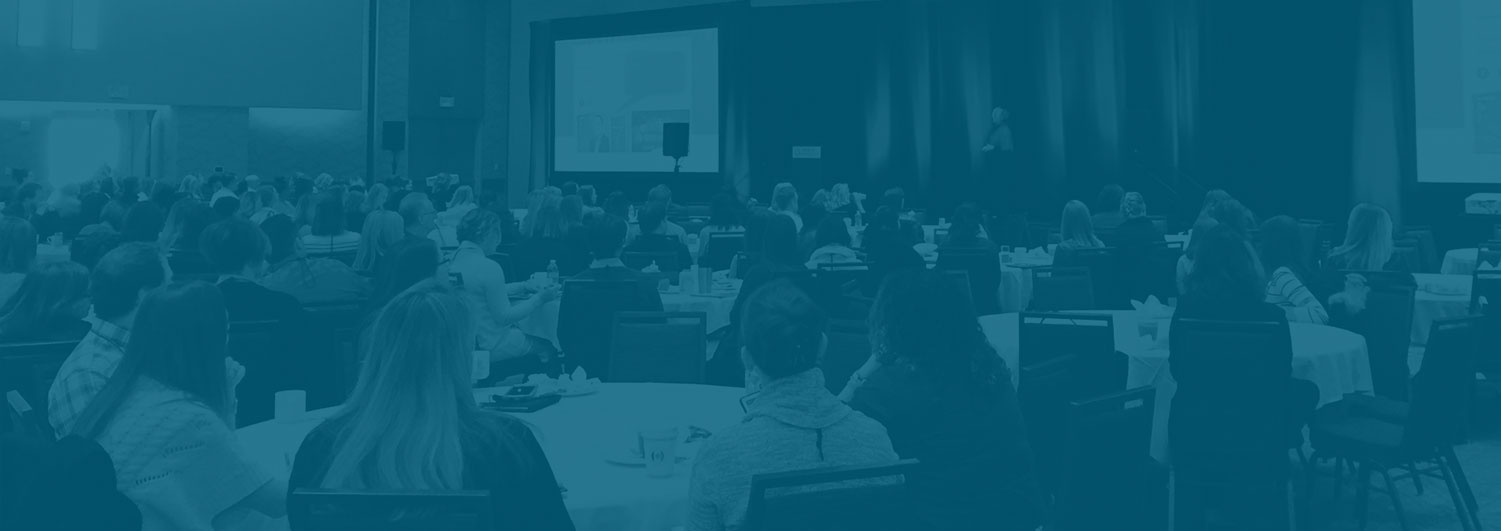
At this year’s Academy of Management conference in Montreal, artist and scholar, Nancy Adler shared that she sees her role as “outing other people’s humanity” while speaking at one of several events in her honor. As she reflected on a few colleagues who were closet musicians, visual artists, and/or participated in their community in other generative ways, she challenged us by asking us why we, in business and scholarship, haven’t begun to think about the beautiful?

Nancy Adler Speaking at Academy of Management Dinner in Montreal

Adler followed this with three more provocative questions about beauty and leadership.

  1. Can we reclaim our ability to see the beauty that’s there?
  2. Can we reclaim our ability to imagine what’s beautiful?
  3. Can we reclaim our role as leaders and human beings to make the world a more beautiful place?

If we truly take up Adler’s challenge and surrender to living these particular questions, I believe we cannot help but out our own and each others’ humanity. For as we reclaim our ability to see, imagine and create the beautiful, the artificial barriers that separate our playful self from our serious work self will fall away, as will barriers separating our goal-oriented self, from our process self; our indoor self from our outdoor self, our artist self from our management self, and all of our other dualistic selves.

As a gay person, I have long held the position that to “out someone” is a violation that could potentially put the outed person in serious harm’s way—emotionally, socially, and even physically—depending on the context. In this case, outing should, except in cases of extreme hypocrisy (a vocally anti-gay public figure) be the sole business of the individual.

Adler has gotten me thinking, though. Just as more people take the risk of coming out about their sexual orientation makes the climate safer and more accepting for all (research shows that people who have a close acquaintance or family member who is gay are far more likely to be accepting), should we not be encouraging others to come out around other aspects of their humanity? Will this not make it safer and more acceptable to be human—to bring our whole selves to work, and into all aspects of our lives?

What, then, is our role as leaders, facilitators, and participants in co-creating the space in which it is safe enough to come out?

What beauty might we discover and co-create together when we reclaim this responsibility?

Five Ways to Make Space for People to Play with New Ideas and Perspectives

June 30th, 2010

As often as I balk at prescriptive approaches to creating playspace, I am asked for examples of how others are doing it in their organizations. Below is a short list of innovative approaches from a wide range of organizations. Some are from “From Workplace to Playspace,” others I have heard from workshop participants and readers around the country. I hope that you will be inspired and “get permission” from them to experiment with approaches that fit for your organization.

1)    Warm-up Your Day. Umpqua Bank, a thriving regional community bank, featured in the book, begins every day across its more than 175 locations with something CEO, Ray Davis calls a “Motivational Moment.” Every single employee gathers in the lobby at each location to join in a group activity to boost their energy and enthusiasm for the day. Anyone can lead the session, and the only guidelines are that it cannot be political or religious in nature. This means that Umpqua associates start their day singing, dancing, improvising, playing games such as Marshmallow Dodge Ball and generally building the camaraderie, good will and focus that has landed them on Fortune’s 100 Best Companies to Work For list the last four years in a row.

2)    Warm-up Your Meeting. Research shows that people are more creative if they engage in some sort of light-hearted creative activity before they take on a new challenge (Conti, Amabile, & Pollack, 1995). Anything from 60 seconds of Be. Here. Now. time (see demonstration video) to engaging in a brainstorm about how to solve some seemingly impossible challenge (e.g. How can we eliminate world hunger? How can we become a totally paperless office? How can we use migrating birds to deliver our communications?), the more outlandish, silly and/or impossible the challenge, the better.

3)    Argue a Different Point of View. Skilled debate teams regularly switch sides to become more adept at their craft. You can build your team’s critical thinking skills in a similar way. If you see a passionate debate come to a deadlock, ask the key proponents from each side to argue for another option. Ask others to list the pros and cons as they emerge. This is also an effective strategy if everyone seems to be getting cozy with one point of view. Step back and ask people to argue for the opposite view, or for a point of view that is not represented in the room (e.g. Play the role of the front-line worker, customer, student, child, non-English-speaking immigrant, senior citizen). What new possibilities emerge when you consider the other side? Are there ways to take these concerns into consideration?

4)    Play. There are endless lists of games and contests that can bring more play (as in flexibility) in the system, levity, build relationships and open up more space for possibilities. Some of my favorites include Google’s “Pimp My Cubicle” Contest, and various guessing contests, such as those inviting employees to match baby pictures, hobbies, or pet photos with their owners. These have significant value in getting people to connect outside of their formal roles and responsibilities, which goes a long way in building relationships and social capital—that enhance collaboration and resource sharing.

5)    Say, “Yes, and . . .” Anyone who has taken a basic improv class (or attended one of my playspace sessions) knows that “Yes, and . . .” is the secret to successful collaboration and idea generation. It is also key to making space for more possibilities. It simply means that we replace the word “but” with the word “and” and look for every opportunity to build on our colleagues’ ideas. Saying “yes” does not mean we are going to implement every idea, simply that we are willing to explore its possibilities. Most innovative solutions began as crazy impractical ideas that benefited from some generous “yes, and-ing.” Take it for a test drive and let me know how it worked for you!

This list is just a start. Please post your ideas for making more space for the play of new ideas and perspectives in the comment section below!

•••••••••

Conti, R., Amabile, T. M., & Pollack, S. (1995). The positive impact of creative activity: Effects of creative task engagement and motivational focus on college students’ learning. Personality and Social Psychology Bulletin, 21, 1107–1116.

Do We Make a Difference?

June 3rd, 2010

When I am struggling in the in-between spaces of my work, between client projects, speaking engagements and in the necessarily self-propelled spaces of my fragmented life as a writer, speaker, educator and consultant, I seem to return to the same question as many: “Do I make a difference?”

In this most recent round of reflection, the memory of my mother’s oncology nurse, Phyllis floated up. Phyllis had worked on the unit for nine years during which time she had shepherded countless families through their journey with cancer—some to happy endings, many through the painful final days. Phyllis also had a deeply personal relationship to cancer, having lost her own husband to the disease only a year before.

In the months my mom was in and out of the oncology unit at Baptist East Hospital in Louisville, Kentucky, Phyllis became a touchstone. She seemed to be the one on duty when we received both promising news, and major setbacks. Through it all, she was present, compassionate, and encouraging. She treated me and my brother, and our partners, with kindness and as people with whole lives, which until only recently had nothing to do with cancer, hospitals, surgeons and doctors.

My Mom & Me

For four months I remained fiercely hopeful for my mother’s recovery. In the fifth month, in a tearful consult with her oncologist and surgeon it was clear that there was no more to be done, nothing more to do but be present and lovingly care-full to my mom during her final days. I spent most of those days quietly sitting by her bedside, listening to the click click click of the machines, watching the drip   drip    drip of the IV and starring at my mothers face, hands and feet studying every freckle and vein—trying to memorize her so I would never forget even a strand of hair in her all-too-soon absence.

On one of these days, as I sat starring, studying and listening in the dim room Phyllis walked into the room to change my mother’s IV bag. I looked up and was struck by her consistent grace. For a moment, I set my grief aside and asked her how she did it. How did she, with all she had seen, day in and day out, the pain, the loss, the loss of her own husband, and the too few and far between miracles—how did she do it? How did she show up, day after day and still maintain her presence and good cheer?

Phyllis responded to me with a simple wisdom, that I call up to this day–in times of frustration, and in the completely non-life-threatening in-between spaces of my life. She stopped, in mid-hanging of the IV bag and said, “You know, honey, I think all of us here would tell you the same thing. And we don’t even have to talk about it—we all know that we can’t control this disease, or necessarily impact the final outcome, but each and every one of us on the floor knows that we make a difference.” And with that, she finished hanging the IV bag and slipped out.

A few days later, an hour before Mother’s Day, my mom slipped away. With me, my partner, my brother and his wife all by her side. And while this was not the outcome any of us hoped, prayed, and pleaded for—while her death sent us tumbling into our grief—to this day, each and every one of us knows that we, too, made a difference. We made a difference to my mom and each other by our presence, love and care. We couldn’t save her from the disease, and we still made a difference.

This is the lesson I learn and re-learn in the spaces in-between, when I can be prone to morbid self-reflection: that there are very few things we have ultimate control over: whether clients follow through on our guidance, or their commitments, whether people buy (and, then actually read) our books, whether the new leadership builds on the progress of their predecessors, or a thousand other uncontrollable twists and turns of the human and natural systems in which we work.  AND, each of us, if we show up with presence, integrity, and care, living and working at the top of our capacity, can rest assured that, just as Phyllis does, each day we, too, make a difference.

Four Learning Trends & Reflections from ASTD 2010

May 26th, 2010

One week after this year’s ASTD International Conference & Exhibition  I thought I would take a moment for a little reflective learning and lessons learned.

Importance of Pace and Energy Conservation

From years of conference attendance and presenting, I have learned how important it is to pace myself and monitor my own energy. As a participant, this means not trying to go to every single session, meet every possible contact, and visit every exhibition booth. Early on, I learned that with this strategy I soon met with diminishing returns. Much better to attend a few sessions that are right on target for my current interests and practice issues, take some breathing room after to make notes and think about application than to scurry off to the next session.

Similarly, I find it much more useful to have quality interactions with people, than work on quantity. I found some wonderful connecting places and opportunities to share resources with the folks who I made the time to get to know.

Whole Person Learning in Action

Pace & Energy in Facilitated Learning

Attuning to pace and energy in the learning sessions is especially paramount on long conference days. No matter how ground-breaking your content, if you haven’t engaged participants energy and ability to make meaning of your content you are dead in the water in the first five minutes. The sessions I attended that were most effective respected the basic human need for whole person engagement, without reducing the experiential learning to a “dog and pony show.” In other words, the learning experiences need to be relevant. This is not new news, and from the sessions I participated in it is clear that even at this stage in our practice and understanding we all need to be reminded of it.

Emerging Technology & Learning

Perhaps the biggest trend at the conference was the power of social media to help us connect, keep us connected and share key learning. Throughout the conference many participants tweeted from sessions, giving people who could not attend the specific session (or the conference at all) a chance to “get the high points.” People were tweeting across session rooms, as well, commenting about what they loved (and didn’t love) about their experience. Twitter also served as the bulletin board for spontaneous gatherings (Tweet-ups), Exhibitor give-aways, and program updates. The blessing of this is engagement; the potential “curse” is that rich content and experiential learning cannot always be reduce to a140 character limit.

I highly recommend checking out the #astd10 twitter stream to get a taste of the content, as well as some great tips on Chicago pizza and sights seeing!

Relational and Social Learning

Walking the Exhibition Hall, I was also excited to see all of the new platforms available using technology to enhance learning. The biggest trend I see is the use of multiple platforms to support informal, incremental and just-in-time learning. Many, such as bloomfire.com have designed programs that are embedded in, or facilitate the creation of communities of practice. I am heartened to see this combination of relational and social learning, with content, and skill development.

The future of training and learning looks bright. It is social, interactive, engaging, improvisational and sometimes even playful!

Improvisation Capacity & Playspace

May 12th, 2010

The dynamics of playspace come to life as they are enacted each day in the real-time spaces we create. I first discovered the power of playspace through the detailed descriptions of people who were developing their capacities for innovating, learning, and changing as they learned improvisation.

As I analyzed their experiences, I saw two important interconnected phenomena. First, the individual capacities emerged as people developed increasing awareness, acceptance, and appreciation of themselves, their colleagues, and their context in action. Second, people’s individual experience came to life through dynamic engagement in the playspace the co-created. The more playspace people experienced, the more improvisation capacity they developed and the more improvisation capacity they developed, the more playspace they experienced.

From: From Workplace to Playspace: Innovating, Learning and Changing Through Dynamic Engagement (Jossey-Bass, 2010)

In this short video I describe and demonstrate the relationship between playspace and improvisation capacity:

Making The Business Case for Playspace

April 13th, 2010

The most common challenge I hear from organizational stakeholders is that they need to be able to make the business case for the so-called soft strategies before they can get buy-in from their colleagues. The idea that strategies that engage the whole person are soft, while those that target operational aspects of organizational life are worthwhile, overlooks the very core of organizational success—the living, breathing people who must fulfill its mission each day. Without engagement, without playspace for innovating, learning, and changing, the best that
organizations can hope for is compliance. Unfortunately compliance is not enough to ensure organizational success. People do not challenge each other’s ideas, explore alternative scenarios, or persevere through complex issues and obstacles out of compliance; they do so out of commitment (Senge, Roberts, Boss, Smith, & Kleiner, 1994).

Commitment is fostered by engagement, and engagement
is fostered in playspace. A study conducted by Patrick Kulesa (2006), global research director at Towers Perrin, of 664,000 employees from around the world showed a significant difference in the business success of companies in which workers were highly engaged and those with low engagement scores. Their research showed a 52 percent gap in operating income between high- and low-engagement companies, a 13 percent growth in net income for high-engagement companies versus a 3.8 percent decline in low-engagement companies, and a 27.8 percent growth in earnings per share for high-engagement companies versus an 11.2 percent decline for low-engagement companies. There is a direct link between spaces that inspire high engagement and profitability.

From: Meyer, Pamela. From Workplace to Playspace: Innovating, Learning and Changing Through Dynamic Engagement (Jossey-Bass, 2010)

References
Kulesa, P. (2006). Engaged employees help boost the bottom line [Electronic Version]. HR.com, 2. Retrieved April 15, 2009 from http://tinyurl.com/qyw45x.

Senge, P. M., Roberts, C., Boss, R. B., Smith, B. J., & Kleiner, A. (1994). The fifth discipline field book: The art and practice of the learning organization. New York: Doubleday.

What if you don’t have leadership buy-in to create playspace?

April 7th, 2010

In these first few weeks since From Workplace to Playspace has been out I have had the pleasure of sharing some of its key concepts with a wide range of audiences, including creativity and innovation experts, MBA and training and development graduate students, managers and employees, and HR professionals. One of the most consistent questions I have received so far is “What if you don’t have leadership buy in to create playspace in your organization?”

My response to this comes in two, seemingly contradictory, parts:

1) We all can make choices and behave in ways that influence the quality of our conversations, collaborations and overall experience of engagement at work.
2) Significant organizational change requires the support and buy-in from leaders and key stakeholders.

The first part of the response is at the core of From Workplace to Playspace: we must all take responsibility for the quality of our own work experience and address the dimensions and dynamics that are within our span of influence. Because playspace is created in the present moment in the midst of conversations, collaborations, co-creations, learning and change we each can take responsibility for our own mindset and behavior in each specific context. For example, if I show up to a meeting with a mindset that this is a waste of my time, and no one ever has any fresh ideas or perspectives to share and I behave in ways that don’t encourage new thinking, I will very likely have exactly this experience. However, if I choose to shift my mindset to one in which I believe there is room for the play of new ideas and for people to play new roles and I take responsibility to share and provoke such new perspectives and capacities, there is a good chance I will have a different, more engaged experience. This is the essence of my playspace mantra: Give Permission & Take Responsibility. Anyone in the organization, at any level can put this into practice within their span of influence and create more playspace in the present moment.

The second part of my response to this question is also true. When large-scale, organization-wide change at the level of systems, process and culture are necessary, buy-in from organizational leaders and key stakeholders is essential. The people who have the biggest influence on whether or not a change initiative is successful, or a new mindset takes hold are employees’ immediate supervisors, managers and key-stakeholders. When people at all levels of the organization see their leaders changing their behavior and mindset, and willing to acknowledge that they themselves may at times have been one of the blocks to organizational innovating, learning and changing, then others are likely to change their mindset and behavior as well. In this way, organizational leaders also serve as permission-givers and responsibility-takers.

For more examples of how people at all levels of organizations are doing just this, read From Workplace to Playspace and return to playspace.biz in the coming weeks when we start posting brief videos of playspace success stories.

Three Ways Fools Foster Creativity

April 1st, 2010

One of the most powerful influencers of the available space for new ideas and perspectives are the people who are willing to be “foolish” when everyone else around them is overly stressed, serious, or attached to their own ideas. It is particularly apt to celebrate these fools today, a day where we play practical jokes, take ourselves a little less seriously, and loosen our grip on our well-honed “brand identities.”

My father, pictured here, was the earliest “April Fool” in my life. In my formative years, he was an architect by day, as well as a master of silliness and innovation. There was no idea or adventure too outlandish to at least get air time, if not actual exploration and implementation—including designing a childhood fantasy room for me with no walls, hanging from the ceiling, and seriously considering building a small airplane in the garage (he was also a pilot) that he would fly to and from work using the pond behind our house as his landing strip.

As with most of our parental relationships, mine with my father, became more complicated than this early role he played for me. And, today, I choose to celebrate his foolishness and all of the playspace he gave me permission to explore in my own life and work. I invite you to celebrate the April Fools in your life, today, too, and acknowledge all of the ways they foster innovating, learning and changing around them:

April Fools Take Permission: They don’t wait around to find out what the rules are, or monitor their behavior for fear of what others might think or say. Permission-Taker’s foster creativity and learning by provoking our sensibilities, pushing the envelope and sometimes making us a bit uncomfortable. These permission-takers create more space for all of us to step out of our familiar ways of thinking, being and doing and risk a bit of foolishness ourselves.

April Fools Give Permission: By being the first, biggest and/or loudest to play around with new ideas, experiment with new identities, create more play in the system, and room for improvised play, April Fools give everyone else permission to do the same. The safety and encouragement they foster are essential for many people to risk the discomfort that comes with exploring the previously uncharted territory of innovating, learning and changing.

April Fools Help Us Lighten Up. I once heard a lab director report that he knew his scientists were on the brink of a new discovery when he heard laughter coming down the hallway. It is often in the midst of silliness when we can literally play around with new ideas and perspectives, and make break-through discoveries and insights.

Just as the fools and court jesters of the Middle Ages and beyond took permission to say things to royalty that others wouldn’t dare, when we ourselves risk foolishness, we can provoke fresh thinking and new perspectives, and help others loosen their grip on their cherished identities and routines. Long live the fool!
Read the rest of this entry »

Follow the Energy

March 2nd, 2010

One of the consistent themes I have seen in everything from improvised scenes on stage to creative collaboration sessions and entire organizations is that when people follow the energy of what is most compelling and engaging they are more successful. Appreciative Inquiry is based on the principle that in every human system something works, and if we tap into the energy of what is working we will likely tap into what people care about and their generative capacity to create positive futures. Just as plants grow toward the sunlight so, too, do human systems grow toward their generative core. This does not mean that we ignore obvious problems, or put on rose colored glasses that only reveal the positive. It means that we use the generative energy of what drives us to co-create new and better possibilities.

In an improvised scene generativity is fostered by the practice of saying, “Yes, and . . .” or accepting a fellow players idea (or “offer”) and building on it with something that heightens and explores what is most interesting. In creative collaboration, it plays out similarly when people come together to generate new possibilities by building on each idea, rather than finding every flow, and in organizational systems it means following the people, processes and products that are generating most interest and attention, as well as revenue. In our personal and professional lives, it also means not laboring over relationships and projects that simply are not coming to life, or life-giving. I regularly have opportunities to relearn this lesson, and each time I have discovered that when I move on from a situation that is no longer generative, it frees up additional energy and resources for even more fruitful possibilities.
For more on the relationship between improvisation and appreciate inquiry, see my article at http://www.meyercreativity.com/articles/.

Purposeful Play

February 2nd, 2010

One of the common misconception about play is that it is necessarily purposeless, and therefore can’t possibly have any place in business. Harvard scholar and jazz pianist (and mentor) Frank Barrett calls improvised play a form of “disciplined imagination” reminding us that play can also be wildly productive and innovative.

What does purposeful play require?

Naming the Purpose: Whether the purpose is to play a game, energize a team, or create space to generate new product ideas, naming the purpose of the play is essential for engaging and aligning the passion and energy of all collaborators.

Making Space for the Play of New Ideas: This means valuing the space and its necessity for ideas to play within it enough to: Not check email, answer the phone, and engage in distractions, as well as fostering the relational, generative, safe, timeful and provocative dynamics necessary for engaged creative collaboration.

The Discipline of Playing Time: Star athletes and breakout artists mature their talent by dedicating hours and hours of playing time—not now and then, but routinely, with dedication and commitment that values both the process and product of their play.

Curiosity: Approaching the playing space with an attitude of inquiry, rather than a singular focus on perfection. Playspace is space for experimentation and exploration. People who play with purpose are always looking for a better, more interesting, and innovative way.

Persistence and Perseverance: People who are fully engaged are much more likely to persevere through the inevitable twists and turns of innovating, learning and changing. Returning to the essential core that sparked your passion for playing in the first place can regenerate the motivation and commitment to forge ahead and engage the discipline that allows the imagination to flow again.

Purposeful play transcends the work-play dualism that leads many to dismiss play as inappropriate for serious endeavors. What could be more serious for business than a commitment to making space for innovating, learning and changing?